Top 10 Bitcoin Alternatives
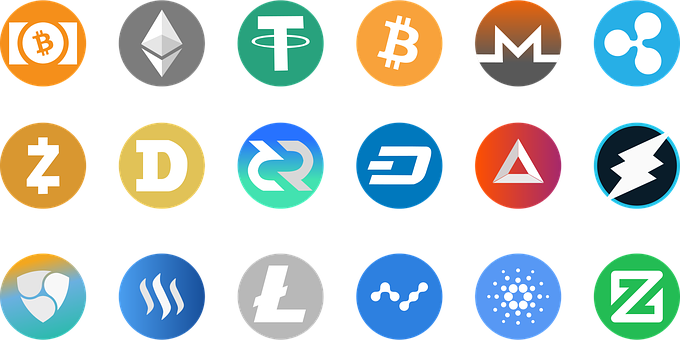
Bitcoin has not only been a trendsetter, ushering in a wave of cryptocurrencies based on a decentralised peer-to-peer network, but it has also become the de facto standard for cryptocurrencies, inspiring a slew of followers and spinoffs.
Note:-
A cryptocurrency is a type of digital token or "coin" that exists on a distributed and decentralised ledger known as a blockchain.
Aside from that, the field of cryptocurrencies has grown dramatically since the launch of Bitcoin over a decade ago, and the next great digital token could be released tomorrow.
In terms of market capitalization, user base, and popularity, Bitcoin continues to lead the pack of cryptocurrencies.
Ethereum and other virtual currencies are being used to build decentralised financial (DeFi) systems.
Some altcoins are endorsed as having newer features than Bitcoin, such as the ability to process more transactions per second or to use different consensus algorithms, such as proof of stake.
What Exactly Are Cryptocurrencies?
Before delving deeper into some of these Bitcoin alternatives, let's take a step back and define terms like cryptocurrency and altcoin. A cryptocurrency, in broad terms, is virtual or digital money in the form of tokens or "coins." While some cryptocurrencies have entered the physical world through credit cards or other projects, the vast majority remain completely intangible.
The term "crypto" refers to the complex cryptography that enables the creation and processing of digital currencies and their transactions across decentralised systems. Along with this important "crypto" feature, these currencies all share a commitment to decentralisation; cryptocurrencies are typically developed as code by teams who include mechanisms for issuance (often, but not always, through a process known as mining) and other controls.
Cryptocurrencies are almost always designed to be free of government manipulation and control—though, as the industry has grown in popularity, this fundamental aspect has come under scrutiny. Altcoins, and in some cases shitcoins, are cryptocurrencies that are modelled after Bitcoin and have frequently attempted to present themselves as modified or improved versions of Bitcoin. While some of these currencies may have some impressive features that Bitcoin does not, an altcoin has yet to match the level of security that Bitcoin's networks achieve.
Other than Bitcoin, we'll look at some of the most important digital currencies below. But first, a disclaimer: it is impossible for a list like this to be completely comprehensive. One reason for this is that there are over 8,000 cryptocurrencies in circulation as of December 2021. 1 While many of these cryptocurrencies have little to no following or trading volume, others are extremely popular among dedicated communities of backers and investors.
Aside from that, the field of cryptocurrencies is constantly expanding, and the next big digital token could be released tomorrow. While Bitcoin is widely regarded as a pioneer in the world of cryptocurrencies, analysts use a variety of methods to evaluate tokens other than BTC. Analysts, for example, frequently place a high value on ranking coins relative to one another in terms of market capitalization. We've taken this into account, but there are other reasons why a digital token could be on the list.
Cryptographic Forms
Cryptocurrencies are designed to be used for payment, sending value (similar to digital money) across a decentralised network of users. Many altcoins (those that are not bitcoin or ether) are classified in this manner and are sometimes referred to as value tokens.
There are also blockchain-based tokens that serve a purpose other than monetary value. A token issued as part of an initial coin offering (ICO) that represents a stake in a blockchain or decentralised finance (DeFi)project is one example. Security tokens are tokens that are linked to the value of a company or project (as in securities like stocks, not safety).
Other tokens serve a specific purpose or perform a specific function. Storj tokens, which enable people to share files across a decentralised network, or Namecoin, which provides decentralised Domain Name System (DNS) service for Internet addresses, are two examples. 23 These are referred to as utility tokens.
Today, while many crypto users understand and appreciate these distinctions, traders and lay investors may not notice them because all types of tokens tend to trade in the same way on crypto exchanges.
1. eTrust (ETH)
Ethereum (ETH), the first Bitcoin alternative on our list, is a decentralised software platform that allows smart contracts and decentralised applications (dApps) to be built and run without downtime, fraud, control, or interference from a third party. The goal of Ethereum is to create a decentralised suite of financial products that anyone in the world, regardless of nationality, ethnicity, or faith, can freely access. 4 This aspect makes the implications for those in some countries more compelling, as those who lack state infrastructure and state identification can obtain bank accounts, loans, insurance, and a variety of other financial products.
Ethereum applications are powered by ether, the platform's proprietary cryptographic token. Ether (ETH) is a vehicle for moving around on the Ethereum platform, and it is primarily sought by developers looking to develop and run applications within Ethereum, as well as investors looking to purchase other digital currencies using ether. Ether, which debuted in 2015, is now the second-largest digital currency by market capitalization after Bitcoin, though it lags far behind the dominant cryptocurrency. 5 Ether's market cap is slightly more than half that of bitcoin, trading at around $4,000 per ETH as of December 2021. 6
In 2014, Ethereum launched an ether presale, which received a massive response, ushering in the age of the ICO. Ethereum claims that it can be used to "codify, decentralise, secure, and trade just about anything." Following the 2016 attack on the decentralised autonomous organisation (DAO), Ethereum was split into two coins: Ethereum (ETH) and Ethereum Classic (ETC). 7
Ethereum's consensus algorithm will be changed from proof of work (PoW) to proof of stake (PoS) in December 2020. (PoS).
8 This change is intended to allow Ethereum's network to run with far less energy and faster transaction speeds, as well as to create a more deflationary economic environment. PoS enables network users to "stake" their ether to the network. This procedure aids in the security of the network and the processing of transactions. Those who do so are rewarded with ether, which functions similarly to an interest account. 9 This is a different mechanism than Bitcoin's PoW, in which miners are rewarded with more BTCs for processing transactions. 10
Litecoin (LTC) (LTC)
Litecoin (LTC), which debuted in 2011, was one of the first cryptocurrencies to follow in Bitcoin's footsteps and has been dubbed the "silver to Bitcoin's gold."
Litecoin is based on an open-source global payment network that is not centralised and employs Scrypt as a PoW that can be decoded using consumer-grade central processing units (CPUs). Litecoin is similar to Bitcoin in many ways, but it has a faster block generation rate and thus offers faster transaction confirmation time.
Aside from developers, there is an increasing number of merchants who accept Litecoin. Litecoin has a market capitalization of $10 billion and a per token value of around $148 as of December 2021, making it the world's 18th-largest cryptocurrency. 12
Cardano, third (ADA)
Cardano (ADA) is a "Ouroboros proof-of-stake" cryptocurrency developed by engineers, mathematicians, and cryptography experts using a research-based approach.
13 Charles Hoskinson, one of Ethereum's five original founding members, co-founded the project. He left Ethereum after some disagreements with the direction it was taking, and later helped to create Cardano.
Cardano's blockchain was created through extensive experimentation and peer-reviewed research by the Cardano team. The project's researchers have published over 120 papers on blockchain technology covering a wide range of topics. 14 Cardano is built on this research.
Cardano appears to stand out among its PoS peers as well as other large cryptocurrencies as a result of this rigorous process. Cardano has also been dubbed the "Ethereum killer," owing to its blockchain's ability to do more. Cardano, on the other hand, is still in its early stages. While it has already surpassed Ethereum in terms of PoS consensus, it still has a long way to go in terms of DeFi applications.
Cardano aspires to be the world's financial operating system by developing DeFi products similar to Ethereum and offering solutions for chain interoperability, voter fraud, and legal contract tracing, among other things. Cardano has the sixth-largest market capitalization at $42 billion as of December 2021, and one ADA is worth around $1.25.15.
4. Polka dotted (DOT)
Polkadot (DOT) is a one-of-a-kind PoS cryptocurrency that aims to provide interoperability with other blockchains. Its protocol connects permissioned and permissionless blockchains, as well as oracles, allowing systems to collaborate under one roof. Polkadot's core component is its relay chain, which enables network interoperability. Parachains, or parallel blockchains with their own native tokens, are also supported for specific use cases. 16
Polkadot differs from Ethereum in that instead of just creating dApps on Polkadot, developers can create their own blockchain while still benefiting from the security that Polkadot's chain already has. Developers can create new blockchains with Ethereum, but they must create their own security measures, which can leave new and smaller projects vulnerable to attack, as the larger a blockchain, the more secure it is. This is known as shared security in Polkadot.
Polkadot was created by Gavin Wood, another member of the Ethereum project's core founders who had differing views on the project's future. Polkadot has a market capitalization of approximately $25 billion as of December 2021, and one DOT trades for $25.17.
5. Bitcoin Cash (BCH)
Bitcoin Cash (BCH) is significant in altcoin history because it was one of the first and most successful hard forks of the original Bitcoin. A fork occurs in the cryptocurrency world as a result of debates and arguments between developers and miners. Because digital currencies are decentralised, wholesale changes to the code underlying the token or coin at hand must be made by general consensus; the mechanism for this process varies depending on the cryptocurrency.
When different factions cannot agree, the digital currency is sometimes split, with the original chain remaining true to its original code and the new chain starting as a new version of the prior coin, complete with code changes.
As a result of one of these splits, BCH was born in August 2017. The debate that resulted in the creation of BCH was about scalability; the Bitcoin network has a limit on the size of blocks: one megabyte (MB). BCH increases the block size from one MB to eight MBs, with the idea being that larger blocks can hold more transactions and thus increase transaction speed. 18 Other changes include the removal of the Segregated Witness protocol, which has an impact on block space.
BCH has a market capitalization of around $8.2 billion as of December 2021, with a value per token of $436.19 6. Stellar (XLM)
Stellar (XLM) is an open blockchain network that connects financial institutions to provide enterprise solutions for large transactions. Massive transactions between banks and investment firms, which used to take several days, involve a number of intermediaries, and cost a lot of money, can now be completed almost instantly with no intermediaries and for little to no cost to the parties involved.
Stellar has positioned itself as an enterprise blockchain for institutional transactions, but it is still an open blockchain that anyone can use. The system supports cross-border transactions in any currency. Lumens are Stellar's native currency (XLM). 20 To transact on the network, users must have Lumens in their possession.
Jed McCaleb, a founding member of Ripple Labs and the creator of the Ripple protocol, founded Stellar. He eventually left his position at Ripple to co-found the Stellar Development Foundation. 21 Stellar Lumens have a $6 billion market capitalization and are worth $0.26 as of December 2021. 22
Dogecoin is number seven (DOGE)
Dogecoin (DOGE), considered by some to be the first "memecoin," caused a stir in 2021 when its price skyrocketed. The coin, which features an image of a Shiba Inu as its avatar, is accepted as payment by a number of major corporations, including the Dallas Mavericks, Kronos, and, perhaps most notably, SpaceX, an American aerospace manufacturer owned by Elon Musk.
In 2013, two software engineers, Billy Markus and Jackson Palmer, created Dogecoin. Markus and Palmer reportedly created the coin as a joke, commenting on the cryptocurrency market's wild speculation.
During the week when Musk was scheduled to appear on "Saturday Night Live," the price of DOGE reached an all-time high of $0.68. Dogecoin has a market capitalization of $22.8 billion as of December 2021, and one DOGE is worth around $0.17, making it the 12th-largest cryptocurrency. 23\sSHIB
Shiba Inu (SHIB), a memecoin inspired by a memecoin, rose to prominence in the fall of 2021, briefly surpassing Dogecoin's market capitalization.
Binance Coin (BNB) (BNB)
Binance Coin (BNB) is a utility cryptocurrency that serves as a payment method for trading fees on the Binance Exchange. By market capitalization, it is the third-largest cryptocurrency. 24 Those who use the token as payment for the exchange can trade at a reduced rate.
Binance Coin's blockchain also serves as the foundation for Binance's decentralised exchange. Changpeng Zhao founded the Binance Exchange, which is now one of the world's most popular exchanges in terms of trading volume.
Binance Coin began as an ERC-20 token that ran on the Ethereum blockchain. It eventually got its own mainnet. The network employs a proof-of-stake (PoS) consensus model. Binance Coin has a market capitalization of $91.5 billion as of November 2021, with one BNB worth $545.24. (USDT)
Tether (USDT) was one of the first and most popular of a class of cryptocurrencies known as stablecoins, which aim to reduce volatility by tying their market value to a currency or other external reference point. Because most digital currencies, including major ones like Bitcoin, have experienced frequent periods of extreme volatility, Tether and other stablecoins attempt to smooth out price fluctuations in order to attract users who might otherwise be wary. Tether's value is directly proportional to the value of the US dollar. The system enables users to make transfers from other cryptocurrencies back to US dollars more quickly than converting to regular currency.
Tether, which was founded in 2014, describes itself as "a blockchain-enabled platform...to make it easier to use fiat currency digitally."
25 This cryptocurrency, in effect, allows individuals to use a blockchain network and related technologies to transact in traditional currencies while minimising the volatility and complexity that are frequently associated with digital currencies.
Tether is the fourth-largest cryptocurrency by market capitalization as of December 2021, with a market cap of $73.4 billion and a per token value of (you guessed it!) $1.26 10. Monero (XMR) (XMR)
Monero (XMR) is a cryptocurrency that is secure, private, and untraceable. This open-source cryptocurrency debuted in April 2014 and quickly gained popularity among the cryptography community and enthusiasts. This cryptocurrency's development is entirely donation-based and community-driven. 27
Monero was created with a strong emphasis on decentralisation and scalability in mind, and it provides complete privacy through the use of a special technique known as "ring signatures."
28 With this technique, a group of cryptographic signatures appears, each of which contains at least one genuine participant, but the genuine one cannot be identified because they all appear to be valid.
Monero has developed an unsavoury reputation as a result of exceptional security mechanisms like this—it has been linked to criminal operations all over the world. While this is an excellent candidate for anonymous criminal transactions, the privacy inherent in Monero is also beneficial to dissidents of oppressive regimes all over the world. 29
Monero has a market capitalization of $3.2 billion and a per token value of $181.30 as of December 2021.
We were only able to list ten altcoins above, but there are many other important cryptocurrencies out there that compete for position in terms of user bases, market value, and influence over time. Among the other significant cryptocurrencies are (but are not limited to):
TRON Ethereum Classic Solana Avalanche USD Coin Chainlink Algorand Polygon VeChain VeChain VeChain VeChain VeChain VeChain VeChain VeChain VeChain (also mentioned briefly above)
Stacks NEM Decred Storj 0x DigiByte ZCash EOS Tezos NEO Dash Stacks NEM Decred Storj Stacks NEM Decred Storj Stacks NEM Decred Storj Stacks NEM Decred St
What Is the Importance of Cryptocurrencies?
Blockchain-based cryptocurrencies, as decentralised platforms, enable individuals to conduct peer-to-peer financial transactions or enter into contracts. There is no need for a trusted third-party intermediary such as a bank, monetary authority, court, or judge in either case. This has the potential to destabilise the current financial order while also democratising finance. Over the last decade, the cryptocurrency space has grown exponentially, with new innovations and a collective market capitalization of more than $2.5 trillion. 1
Why Is There So Much Variety in Cryptocurrencies?
The majority of today's cryptocurrencies are derived in some way from Bitcoin, which employs open-source code and a censorship-resistant architecture. This means that anyone can copy the code and modify it to create their own new coin. This also implies that anyone is free to join or transact in its network.
What Are Some of the Other Major Cryptocurrencies?
Many cryptocurrencies have gained prominence or have the potential to do so. Dogecoin, for example, was a meme-based joke coin that rose to prominence after Tesla CEO Elon Musk promoted it on social media. Aside from Dogecoin and the others mentioned above, there are several other bitcoin forks, such as Bitcoin Gold and Bitcoin SV. Ripple (XRP), Solana, USD Coin, and Tezos are also important coins.
Why Is Bitcoin Still the World's Most Valuable Cryptocurrency?
Despite the emergence of thousands of competitors, Bitcoin—the original cryptocurrency—remains the dominant player in terms of usage and economic value. As of December 2021, each coin (BTC) was worth approximately $47,000, with a market capitalization of more than $886 billion. 31
Declaimer:
Investing in cryptocurrencies and other Initial Coin Offerings ("ICOs") is extremely risky and speculative, and this article is not a recommendation by Investopedia or the author to do so. Because every person's situation is different, a qualified professional should always be consulted before making any financial decisions. Investopedia makes no representations or warranties about the accuracy or timeliness of the information contained on this website.


0 Comments