Experts predict which bitcoin competitors to watch out for in 2022.
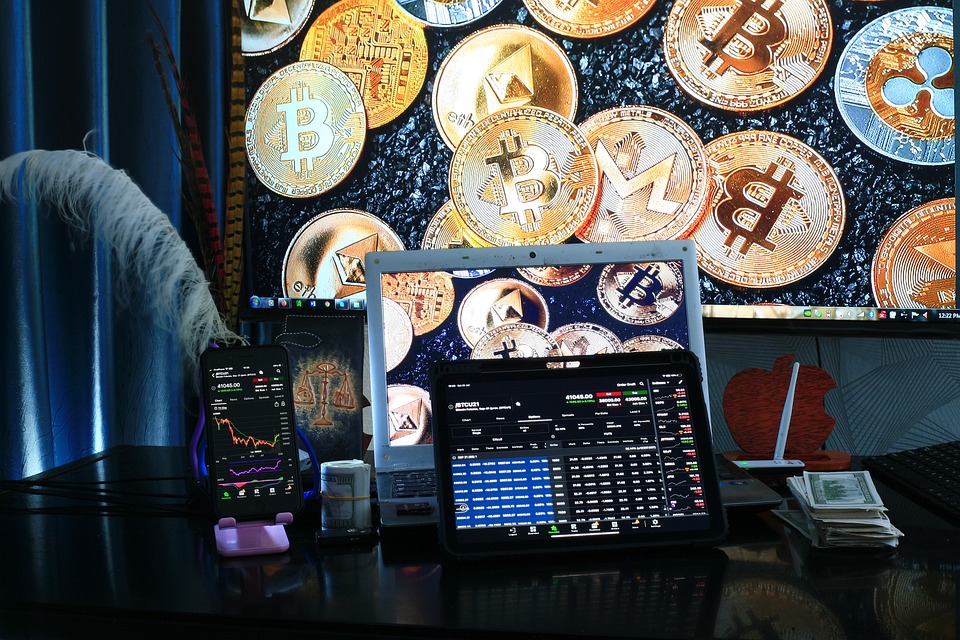
Bitcoin had a record-breaking year in 2021, but experts predict that next year, some of its rivals will surge in popularity and price – and may even overtake it.
Leading figures in the crypto space discussed recent market developments and speculated on where things might go in the next 12 months at a virtual event this week.
Bitcoin reached its most recent all-time high of the year last month, surpassing $68,000 for the first time. It had fallen back below $46,000 by early December.
This latest high represents a significant increase in Bitcoin's price, which began the year below $30,000 in January. Its value varies wildly from day to day, and even minute to minute. This month, the price of Bitcoin has ranged from $45,000 to over $59,000. It surpassed $50,000 for the first time since December 12 on December 23, and has been below $46,000 multiple times in recent weeks.
Despite the volatility, many experts believe Bitcoin is on its way to passing the $100,000 mark, though they differ on when that will occur. Volatility is nothing new, and it is one of the main reasons why experts advise new crypto investors to be extremely cautious when allocating a portion of their portfolio to cryptocurrency.
Bitcoin's value has risen steadily over the years, as has the value of every other cryptocurrency on the market. It's only natural for Bitcoin investors to be curious about how high the currency can eventually rise.
Unfortunately, the price of Bitcoin is extremely difficult to predict, and it is even more susceptible to market factors than more established asset classes. Nonetheless, we decided to poll some experts for their best guesses. Here's what they had to say:
Bitcoin Price Forecasts
Bitcoin is expected to reach $100,000 by 2023, according to conservative predictions.
Some experts are more optimistic. "The most knowledgeable educators in the space are predicting $100,000 Bitcoin in Q1 2022 or sooner," says Kate Waltman, a certified public accountant specialising in cryptocurrency based in New York.
Others are hesitant to predict a number and a date, preferring to focus on the trend of increasing value over time. According to Jurrien Timmer, director of global macro at Fidelity Investments, investors should expect a "pretty sustainable" rise in Bitcoin's long-term value driven by organic market movement, with the $100,000 threshold in sight.
"What I expect from Bitcoin is volatility in the short term and long-term growth," says Kiana Danial, founder of Invest Diva and author of "Cryptocurrency Investing For Dummies."
Unsurprisingly, well-known crypto investors, evangelists, and public commentators have widely differing opinions and predictions on how high Bitcoin can go (and when). Here are some more predictions for the coming year, ranked from low to high:
Balina, Ian
Token Metrics is a cryptocurrency research and media company founded by a Bitcoin investor.
$75,000 by the end of 2021, according to projections.
Why: While technical data shows that $100,000 isn't out of the question, Balina told NextAdvisor that he prefers to be more conservative.
Hyland, Matthew
Analyst for blockchain data and technical analysis
$250,000 by January 2022, according to projections.
Why: According to Hyland's Twitter account, Bitcoin crossing the inescapable $100,000 threshold will spark a euphoric bull run. Hyland cited the 150 percent rise in Bitcoin from $8,000 to $20,000 right after Thanksgiving in 2017 as evidence.
Breedlove, Robert
Observation: Founder and CEO of Parallax Digital, a digital asset marketing and consulting firm.
$307,000 by October 2021 (now passed), and $12.5 million by 2031
Why: Inflationary pressures following COVID-19 will drive interest in cryptocurrency, pushing Bitcoin's value higher than previously estimated. Breedlove also mentioned earlier this year that the last quarter of 2021 is roughly 510 days after an event known as "halving," in which Bitcoin's algorithm changes the reward for mining transactions on the blockchain. Breedlove claims that previous halving events have been followed by new highs 500 days later.
And it's not just cryptocurrency insiders making Bitcoin predictions. Big financial institutions have also made predictions, with JPMorgan predicting a long-term high of $146,000 and Bloomberg predicting it could reach $400,000 by 2022.
What Factors Affect Bitcoin's Price
Supply and demand, public sentiment, the news cycle, market events, scarcity, and other economic factors all have an impact on the price of cryptocurrency, just as they do on the price of any other currency or investment.
As a new and emerging asset, Bitcoin's value is influenced by factors other than currency or security. Here are a few examples:
Scarcity
There are currently 18 to 19 million Bitcoins in circulation, and minting will cease at 21 million. This built-in scarcity, according to industry experts, is a big part of cryptocurrency's appeal.
"There is a fixed supply but increasing demand," says Alexis Johnson, president of Light Node Media, a blockchain public relations and events company.
Other experts argue that Bitcoin has value because people place value on it. "That's really why everyone's buying — because of the psychological aspect," says Nelson Merchan, co-founder of Johnson's Light Node Media. As a result, the average consumer may find it difficult to determine whether Bitcoin and other cryptocurrencies are legitimate. The entire supply and demand concept only works when people want something scarce — even if it didn't previously exist.
When asked about Bitcoin's origins, Merchan says, "It almost seems like a scam." Though he claims to have seen his crypto holdings reach millions of dollars at times since starting to invest in 2017, he also claims to have seen them vanish in an instant.
"I'm a firm believer that if it's not in cash, you don't really have that money because anything can drop dramatically overnight in crypto," Merchan says. To protect your money from volatility, certified financial planners recommend allocating only 1% to 5% of your portfolio to cryptocurrency.
Adoption in the Mainstream
According to Waltman, one of the main factors driving Bitcoin's price increase is the rate at which new consumers are buying and exploring cryptocurrency.
"Crypto technology is being adopted at a faster rate than humans initially adopted internet technology," she claims. Assuming it continues, the compounding acceleration of new adoption could continue to push Bitcoin's value higher and higher.
According to data from the digital asset management firm CoinShares, Bitcoin adoption has been increasing at a 113 percent annual rate. (In the meantime, people are adopting the internet at a slower rate of 63 percent.) If people embrace Bitcoin at the same rate as they did the internet in its early days (or faster), the report claims that there will be 1 billion users by 2024 and 4 billion users by 2030.
According to CoinDesk, the number of new wallets worldwide increased by 45 percent between January 2020 and January 2021, to an estimated 66 million. Coinbase reports that it now has over 73 million global users, while Gemini recently released its "State of U.S. Crypto Report," which found that 21.2 million Americans own cryptocurrency of some kind.
Regulation
In recent months, federal officials have made it clear that they are paying close attention to the crypto industry. President Joe Biden recently signed an infrastructure bill requiring all cryptocurrency exchanges to report their transactions to the IRS. Similarly, Treasury Secretary Janet Yellen recently stated that stablecoins — a type of cryptocurrency linked to the value of the US dollar — should be subject to federal regulation.
According to an industry white paper published by Flourish, a fintech platform designed for investment advisors, the conversation on regulatory policies is "patchy." With cryptocurrency being a relatively new asset class, any new regulation has the potential to impact value and, as a result, investors' portfolios.
When China banned cryptocurrency in September 2021, for example, investors saw Bitcoin's price fall, though it has since risen and resumed its usual volatility. Despite the fact that Bitcoin has now had about a decade of precedent, the Securities and Exchange Commission is taking all decisions on a case-by-case basis in what experts call its "crawl, walk, run" strategy toward mainstream crypto adoption.
"Over the last five years, [regulation] has kind of evolved," says Ben Cruikshank, CEO of Flourish. "Regulators can change their minds at any time."
Cycles of Mining
Finally, a cycle known as halving has a significant impact on Bitcoin's price. It's complicated and algorithmic in nature, but halving is a step in the Bitcoin mining process that reduces the reward for mining Bitcoin transactions in half.
The rate at which new coins enter circulation is influenced by halving, which can affect the value of existing Bitcoin holdings. Historically, halvings have been associated with boom-bust cycles. Some experts attempt to forecast these cycles down to the day after a halving event.
What Investors Should Know About Bitcoin Price Forecasts
As with any investment, financial planners and other experts advise against making emotional decisions based on Bitcoin price fluctuations. Investors who contribute to passive index funds and ETFs on a regular basis outperform the market over time, according to research, thanks to a strategy known as dollar cost averaging.
This is one of the reasons why experts advise not investing more than 5% of your overall portfolio in cryptocurrency, and never investing at the expense of saving for emergencies or paying down high-interest debt. The path to long-term wealth and retirement savings is most often successful for people who invest in diversified investments such as low-cost index funds, with crypto playing only a minor role.
Even in the case of cryptocurrency, experts say a set-it-and-forget-it approach makes sense. "Passive investing is a very valid way to achieve financial goals," says Sarah Catherine Gutierrez, a certified financial planner based in Arkansas.
Because most people are still unfamiliar with cryptocurrency, it's fine to wait and see how things play out before putting your money on the line. We only have about ten years of data to base crypto price predictions on, and the value of Bitcoin, while rising over time, is highly volatile on a daily basis.
Volatility makes it difficult to understand the "what" and "why" of your crypto strategy. Before investing in Bitcoin or any other alternative asset, consider what you want to achieve and why you want to participate in this particularly volatile market. This will assist you in remaining focused.
"I don't think people understand how to value [Bitcoin] across the board," Gutierrez says. "When you're buying it, you need to know what value you expect to get from what you're buying."
Financial planners do not have a bias against cryptocurrency, according to Gutierrez, especially if a client expresses an interest in learning more about it. However, you should consider whether you really need cryptocurrency as part of your strategy. According to Gutierrez, the answer is usually no.
"Our take is that we don't think you need Bitcoin to reach financial goals," she says, adding that the average person should prefer simple, easy-to-understand investment methods. This will keep you on track for your core financial goals and position you for a healthy retirement in the long run.
Since the beginning of December, the cryptocurrency has been trading in the $45,000-$50,000 price range, after plummeting from an all-time high of around $69,000 in November.
The overall cryptocurrency market mirrored bitcoin's stagnation, with several other leading cryptocurrencies all moving by less than 1% in the last 24 hours.
Because of the inertia, Ethereum (ETH) has remained above $4,000, while the overall crypto market has fallen by less than $10 billion. Polygon (MATIC) saw some of the biggest gains, coming within $0.03 of its all-time high of $2.6.
The rally confirmed some analysts' predictions that BTC is still in the midst of a long-term bull cycle. Pseudonymous analyst PlanB maintained his price prediction model, which predicts bitcoin will reach six figures within the next few months before the market experiences a sustained period of price correction.
Because of the inertia, Ethereum (ETH) has remained above $4,000, while the overall crypto market has fallen by less than $10 billion. Polygon (MATIC) saw some of the biggest gains, coming within $0.03 of its all-time high of $2.6.
The rally confirmed some analysts' predictions that BTC is still in the midst of a long-term bull cycle. Pseudonymous analyst PlanB maintained his price prediction model, which predicts bitcoin will reach six figures within the next few months before the market experiences a sustained period of price correction.


0 Comments